What is Net Promoter Score?
Net Promoter Score, or NPS®, is a customer survey question and analysis approach used by companies, large and small, to measure customer experience and predict customer loyalty.
While there are many reasons why NPS is important, it’s main benefit is that a company’s Net Promoter Score versus its competitors is a predictor of future business revenue growth.
NPS is often used as a key metric in Voice of the Customer programs.
The Net Promoter Score Question
To determine NPS® the following question is added to an organisation’s customer feedback survey.
The response is scored on an 11 point scale from Very Unlikely (0) to Very Likely (10).

How to Calculate Net Promoter Score
Once the data is collected, Net Promoter Score is calculated by subtracting the percentage of 0-6 responses (Detractors), from the percentage of 9 and 10 responses (Promoters) to the “Would Recommend” question in your survey. The 7 and 8 responses (Neutrals) are ignored.
The overall score is then between -100 and +100
So, in NPS parlance:
- Anyone that gave you a 0-6 is termed a Detractor;
- Anyone that gave you 7 or 8 is termed a Neutral; and
- Anyone that gave you 9 or 10 is termed a Promoter
And, NPS = Percentage of Promoters – Percentage of Detractors
Here is the NPS calculation in a formula:

Calculating NPS in Excel or Google Sheets is very simple and typically uses the COUNTIF function.
NPS Survey Design
Because the approach is seemingly so simply, just one question, many organisations that start to use it have just add the “would recommend” question to their existing surveys believing this is all that is needed. This is a mistake and does not work.
When you implement Net Promoter you need to collect not just the “would recommend” rating but also the reasons for the rating.
You can do this in several ways;
- qualitative feedback,
- additional scored questions,
- tagging of responses,
- etc.
However, you do it, the why part of the feedback is essential to your success.
Survey Design Resources
Why Net Promoter Score is Important for a Business
The primary reason that NPS is important is that it is a easy to use predictor of customer loyalty.
For this reason Customer Success Managers will often use it as one of their KPIs.
And companies who use NPS to focus their business improvement process see returns over and above the average.
There are many case studies to demonstrate these links.
Companies with a high NPS generate 2.3 times more shareholder value than average
Companies who drive up NPS also drive up company revenue
Companies who focus on achieving a high NPS generally drive down their costs
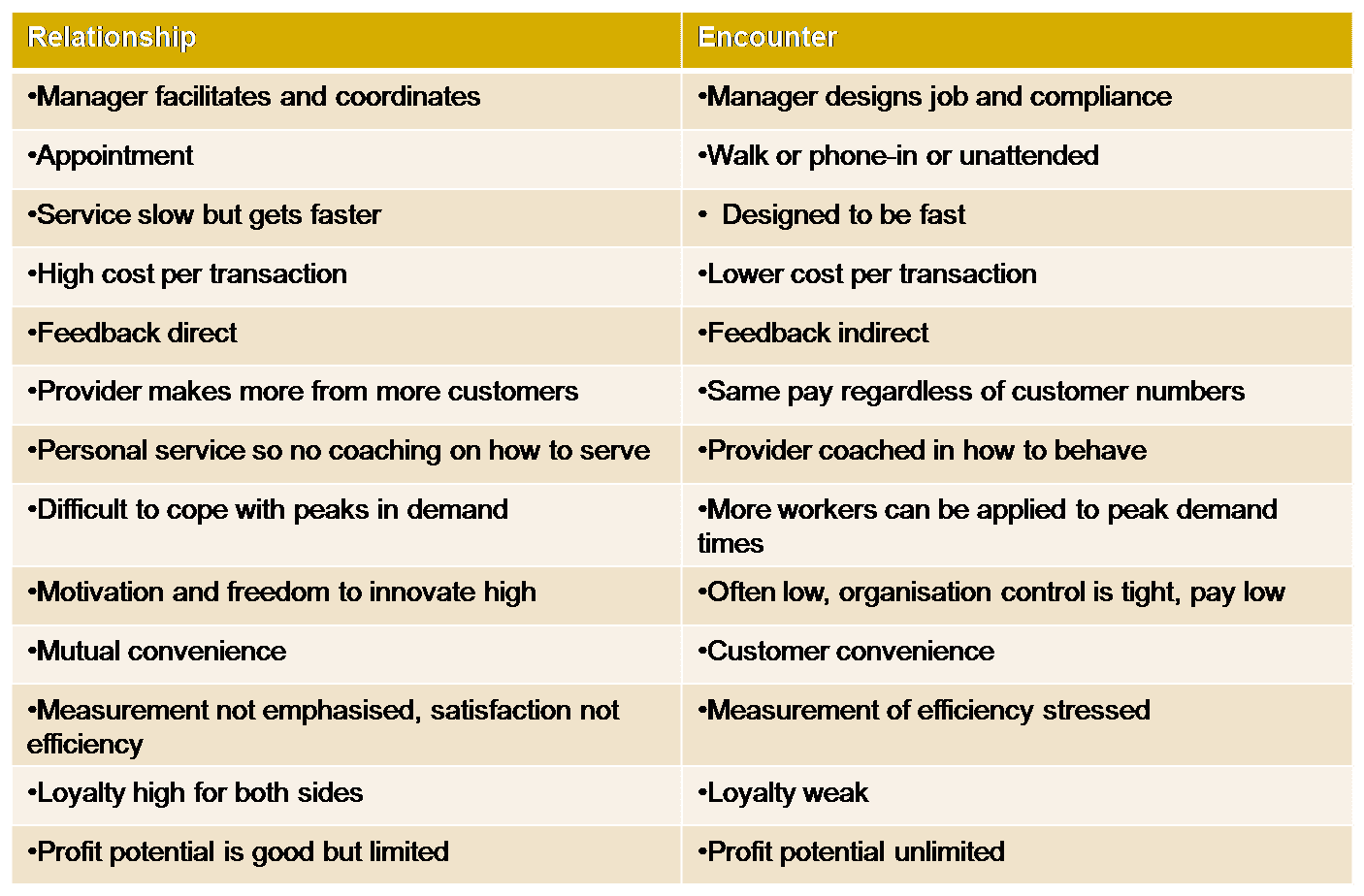
Relationship Vs Transactional NPS Surveys
There are two ways to collect NPS data.
Relationship Surveys
The purpose of a Relationship Net Promoter Score survey is to identify how your business compares with its competitors with respect to overall customer loyalty and the drivers of overall customer loyalty. It is a way to benchmark your company against its competitors.
Relationship NPS surveys are performed on a regular basis, say every 6 or 12 months. They measure your organisation’s overall score.
Benefits of Relationship surveys
- They give you understanding of your overall standing with the client
- They can be compared to other organisation scores to benchmark your progress. Note that you need to be very careful doing this, but it can be done.
Disadvantages of Relationship Surveys
- It can be difficult to understand how to act on the feedback that is received.
- The process sometimes only generates results on a 6 monthly or annual basis.
Transactional Surveys
The purpose of a Transactional Net Promoter Score survey is to measure the NPS of each customer transaction and gather information about what customers liked and disliked during that interaction. This data can then be used to make improvements to the touchpoints in the customer journey and ultimately improve the overall NPS for both the transaction and the relationship with the customer.
Transactional surveys occur after a customer has been through an interaction with your business. It could be a sale, business process or customer service interaction.
Benefits of Transactional surveys
- They tend to be more actionable because they relate to a specific interaction. That way you can summarise all the data around an interaction and make improvements
- They provide an on-going data stream that helps with organisation engagement
- They tend to revolve around times when a customer’s perception of your business changes so are very relevant. It’s mostly at these interactions that customers loyalty will be improved (a good interaction) or destroyed (a bad interaction)
Disadvantages of Transactional Surveys
- It’s very difficult to compare data with other companies because of the specific nature of each interaction.
The Origins of Net Promoter Score
The approach was first presented in a Harvard Business Review article titled: The One Number You Need to Grow in December 2003. The author of the article, Fred Reichheld, was well known in the customer loyalty industry and had performed some unique research.
He wanted to find out if one question could be used to predict a customer’s loyalty. So he asked tens of thousands of customers, lots of different questions, and then cross referenced their loyalty using actual purchasing data.
By testing different approaches, empirically, he discovered that NPS was most often the best indicator of customer loyalty.
Until that time organisations had been using “customer satisfaction” or complex calculations of several different variables to try to predict loyalty. In general customer satisfaction was found to be a quite poor predictor of customer loyalty. The other approach, complex calculations, was found to be accurate but difficult to implement and understand.
In identifying the simple approach, Reichheld had identified an easy to use metric that actually predicted customer loyalty.

Employee Net Promoter Score (eNPS)
Employee Net Promoter Score®, or eNPS, is seen increasingly often in company reports because it is seen as a way to:
- Lower organisation costs by reducing employee turnover and the associated business impact
- Increase customer loyalty through higher employee engagement.
It uses the standard NPS question, just tweaked a little to be focused on the organisation’s employee not it’s products and services.
eNPS Resources
Net Promoter Score Survey Software and Tools
While the formula to calculate NPS is simple, operationalising it in your business is much more complex. You need to consider:
- Automatic sending
- Real-time reporting
- Driver and Root Cause analysis
- Time series data analysis tools
- Segment data analysis tools
- And more…
Market research style survey tools, SurveyMonkey, et. al., are great for one-off surveys but lack the features needed operationalise NPS and drive business success.
A dedicated NPS software platform is a better choice.
NPS Software and Tool Resources
NPS Software: Buyers Guide
Read more →
NPS Software: CustomerGauge
Read more →
How to Calculate NPS In Excel
Read more →
How to Collect Transactional NPS Data
Read more →
How to Automate NPS Data Collection
Read more →

NPS Statistical Data Analysis and Interpretation
If you’ve ever done a statistics course (at any level) you will have heard of sampling and confidence intervals. These terms help you to understand how closely the responses you receive, match the overall population.
Unfortunately, because NPS is a net score (remember, Promoters – Detractors) the calculations are a bit different to those we do on other survey data.
Those calculations are not difficult but the concepts need a little explaining. Grab one of the resources to the side for a detailed explanation or download the spreadsheet which has the calculations already done for you.
NPS Data Analysis Resources
Did my NPS really, really change?
Read more →
Calculating NPS Margin of Error
Read more →
Using Chi-Squared tests on NPS Data
Read more →
Zero is a Special Net Promoter Number
Read more →
The 9 Elements Your NPS® Report Must Have
Read more →
Combining Kano and Net Promoter Analysis
Read more →

NPS Benchmarks: What is a Good Score?
It’s common for companies to wonder how good their score is.
In practice this is a very difficult question to answer because so many factors can affect the score.
So external benchmarks can be difficult to find and apply to your specific business.
On the other hand internal benchmarks are very effective. In this case a good Net Promoter Score is one that is better than you had last quarter, month, year.
“Good” is any score that is continuously improving.
NPS Benchmark Resources
Don’t Waste Your Time On External Data
Read more →
Stop giving people NPS targets
Read more →
What is a Good Net Promoter Score? [Video]
Read more →
Take Care When Comparing Net Promoter
Read more →
34 NPS Case Studies Linked Business Value
Read more →
How Much Can You Improve – Real Company Data
Read more →
Europe Vs Australia: NPS Benchmarks
Read more →

Criticism of Net Promoter Score
Just like any system, there are proponents and detractors for the use of the score. As a high profile system it has been researched substantially and much of the work published.
Criticism & Alternative Resources
Net Promoter Score Alternatives
There are only two NPS alternatives that are in common use as of 2022.
NPS Alternative: Customer Effort Score
Launched in the 2010 Harvard Business Review article “Stop trying to delight your customers”, Customer Effort Score (CES) is less popular than NPS and has it’s fair share of criticism.

NPS Alternative: Customer Satisfaction or (CSAT)
Customer Satisfaction has been used in customer feedback surveys for decades. The question is worded thus:

Implementing NPS
Successful NPS implementation is more than adding a new question to your existing customer feedback survey. There are 5 stages to properly launch it in a business.

Step 1. Initiate
Confirm senior management buy in and create the company structures that you need to drive change. You will also need to consider the change management.
Step 2. Customer Strategy and Context
Analyse your customer journey to design your data collection process:
- Which customers will you survey
- Which touch-points are important
- Where are your key opportunities to improve the business
Step 3. Listen and Service Recovery
Listen: design your data collection survey and start collecting data.
Close the Loop: contact respondents within 48 hours to follow up on their feedback
Step 4. Quick Wins
Implement some small, quick wins using the data you have collected.
Step 5. Big Bets
With the process validated, and proof that it works, you can move on to larger opportunities.
Related Reading
A curated selection of NPS-themed deep dives from the Genroe blog.
The 7 Steps to Best Practice Net Promoter Score® Implementation
Implementing a Net Promoter Score process in your organisation can drive powerful business results. Here’s how to do it right the first time.
Read the post →
Employee NPS®: How to Use this Valuable Employee Engagement Tool
Employee Net Promoter Score or eNPS is seen increasingly often in company reports. What it is and how you use it.
Read the post →
How to Calculate Net Promoter Score in Excel/Google Sheets
Excel/Google Sheets NPS Calculator using the COUNTIF function — includes a downloadable spreadsheet.
Read the post →